


Published on April 23, 2026
Day 1 - March 25, 2026
Day 1 focused on Tata Steel’s safety best practices, highlighting the role of leadership ownership, governance mechanisms, digital enablement, and capability building. A consistent theme across the sessions was the structured use of digital platforms, AI, and analytics to improve visibility, consistency, and preventive safety interventions.
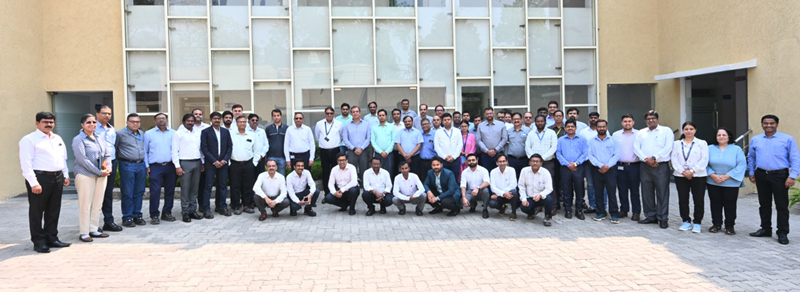
As part of the quarterly Tata Network Forum (TNF) East - Best Practices Sharing Sessions, 45 participants from 30 Tata Group entities took part in learning visits to Tata Steel (Day 1) and Tata Motors (Day 2). The initiative was organized by TNF East in collaboration with the Group Safety & Health team, and brought together senior leaders and safety practitioners to exchange perspectives and operational experiences on strengthening safety across the Tata Group.
Key Learnings
The visit to Tata Steel Limited focused on sessions with senior leadership (Refer page 2) and experiential learning at the Safety Leadership Development Centre (SLDC) and Practical Safety Training Centre (PSTC). These highlighted hands-on safety capability development, including improvements to SLDC based on learning from Toyota. The itinerary also included visits to the Integrated Remote Operations Centre (iROC), Integrated Maintenance Excellence Centre (iMEC), and Integrated Raw Material Supervision Centre (iRMSC). These demonstrated how AI-enabled operations and connected workforce solutions allow ground-level safety aspects to be visualized in a centralized command centre. This approach strengthened the implementation of safety standards, supported behaviour-based safety, and integrated aspects such as reliability, throughput, and maintenance effectiveness for operational excellence.
Key Sessions and Takeaways
Experiential Learning & Digital Showcases
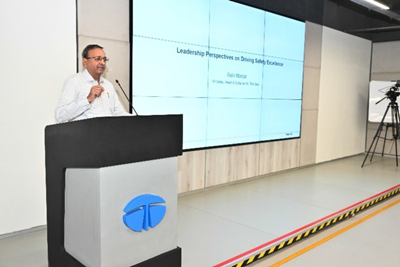
Welcome Address & Context Setting: Leadership Perspectives on Driving Safety Excellence
Rajiv Mangal, Vice President – Safety, Health & Sustainability, Tata Steel, outlined Tata Steel’s safety governance framework, including Apex, Divisional, and Area committees. He emphasised sharper focus on Potential Serious Injury and Fatality (PSIF) risks, Just Culture, felt leadership, and maintaining a balance between Reward & Recognition and Consequence Management.
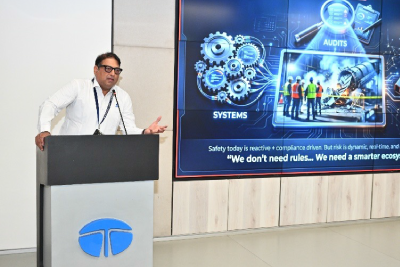
Building a Zero-Harm Ecosystem: Integrated Safety Strategies Across the Value Chain with Digital Enablement
Neeraj Kumar Sinha, Chief – Safety, Tata Steel, demonstrated how digital tools, AI/ML, and analytics are leveraged for proactive risk identification, behavioural safety, SOP compliance, and real time monitoring. He also shared the adoption of the Safety Performance Index (SPI), adapted from Tata Motors, to measure safety culture and performance outcomes.
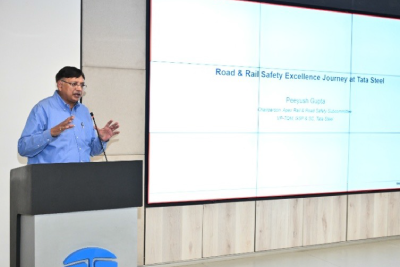
Rail & Road Safety Excellence: Leadership Experiences, Systemic Enablers and Learning
Peeyush Gupta, Vice President - TQM,GSP & Supply Chain, Tata Steel; Chairperson – Apex Rail & Road Safety Subcommittee, traced Tata Steel’s road and rail safety journey, integrating engineering controls, infrastructure enhancements, digital surveillance, and governance mechanisms to address high risk transportation scenarios.
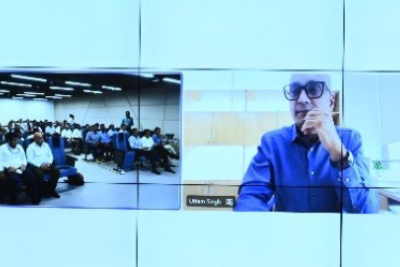
Strengthening Process Safety Culture in High-Risk Manufacturing: Leadership Practices and Experiences
Uttam Singh, Vice President - Tata Steel Kalinganagar; Chairperson – Apex Process Safety & Disaster Management Subcommittee, focused on Process Safety Management (PSM) in high risk operations, covering HAZOP, LOPA, barrier management, early warning indicators, dashboards, and emergency preparedness, with an emphasis on preventing high consequence incidents.
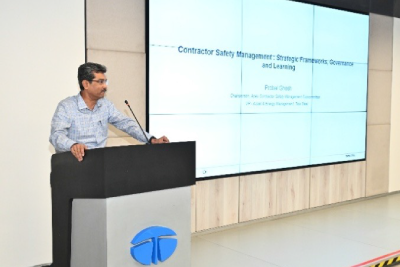
Contractor Safety Management: Strategic Frameworks, Governance and Learning
Probal Ghosh, Vice President - Asset & Energy Management; Chairperson – Apex Contractor Safety Management Subcommittee, outlined Tata Steel’s contractor safety framework, covering lifecycle controls, governance structures, digital monitoring, star rating systems, capability building, and a “One Team, One Standard” approach.
Day 2 - March 26, 2026
Day 2 focused on Tata Motors’ excellence in safety practices, with emphasis on Safety Governance, Digitalisation, and advanced shopfloor safety controls. The central theme was the integration of Risk & Controls, Digital/AI acceleration, and frontline leadership practices through selfdirected teams.
On Day 2 of the Tata Network Forum (TNF) East – Best Practices Sharing Sessions the participants visited the Tata Motors Commercial Vehicle plant at Jamshedpur. The visit provided participants insights on combination of governance frameworks, frontline cleadership practices and cutting-edge technologies offering participants a comprehensive perspective on safety excellence.

Key Learnings
- Self-directed and self managed teams driving accountability
- Critical-to-safety stations ensuring vigilance at high-risk points
- Video analytics and remote monitoring for proactive safety management
- Serious Injury and Fatality (SIF) prevention program strengthening risk mitigation
Unique practice
A distinctive initiative at Tata Motors has been the deployment of 35 employees with disabilities (PwD) on the shop floor, with appropriate safety controls in place. These individuals, drawn from across India and largely from non-technical backgrounds, were trained to work safely and effectively in shop-floor operations. In parallel, staff members were sensitized and trained to engage with PwD colleagues, ensuring inclusion, safety, and productivity.
Digitally enabled practices
Participants visited the the central command centre DigiNova, observing cutting-edge safety digitalisation initiatives:
- Smart Kitting System for efficient and safe assembly
- Vehicle layout inspection using advanced digital tools
- AI-assisted assembly guidance for precision and safety
- Vision-based switch tray assembly enhancing accuracy
- Dark Factory concept featuring remote operations and automation
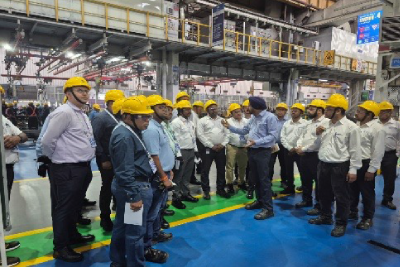
Shop-floor immersions
Guided by experts and self-directed teams, participants gained firsthand exposure to advanced manufacturing processes and stringent safety protocols in:
- Vehicle Line 3
- Transmission Factory
- Engine Factory
Leadership practices such as “90 Minutes of Care Leadership” were demonstrated, reinforcing the importance of felt leadership on the shop floor.
Key sessions and takeaways
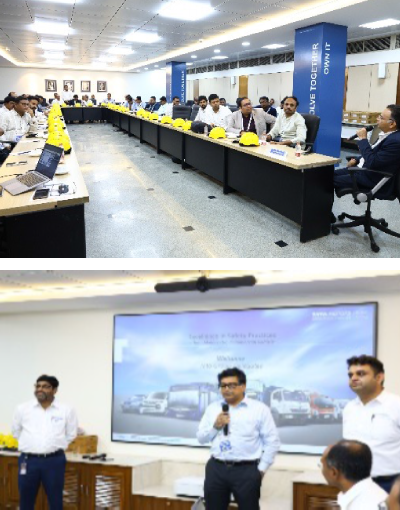
Anurag Chharia, Plant Head – Jamshedpur Plant, presided over the interactions and explained the evolution of safety practices at Tata Motors, highlighting leadership commitment and cultural transformation.
Gaurav Bansal, GM – Safety, and Rahul Wadia, DGM – Plant Safety, presented key initiatives on safety governance and leadership in operational excellence. They emphasized structured accountability and proactive risk management through the deployment of S3 controls identified via HIRA process, with sustained implementation through the Self directed team (SDT) involvement.
Beyond structured sessions, the forum enabled networking and peer-to-peer learning, fostering collaboration, cross-pollination of ideas, and reinforcing the collective commitment to safety excellence across Tata Group entities.