
Published on May 29, 2026
The Tata Business Excellence Group initiated the TBEM Assessment 2026 cycle with the conclusion of the Business Excellence Head (BEH) Orientation Programme.
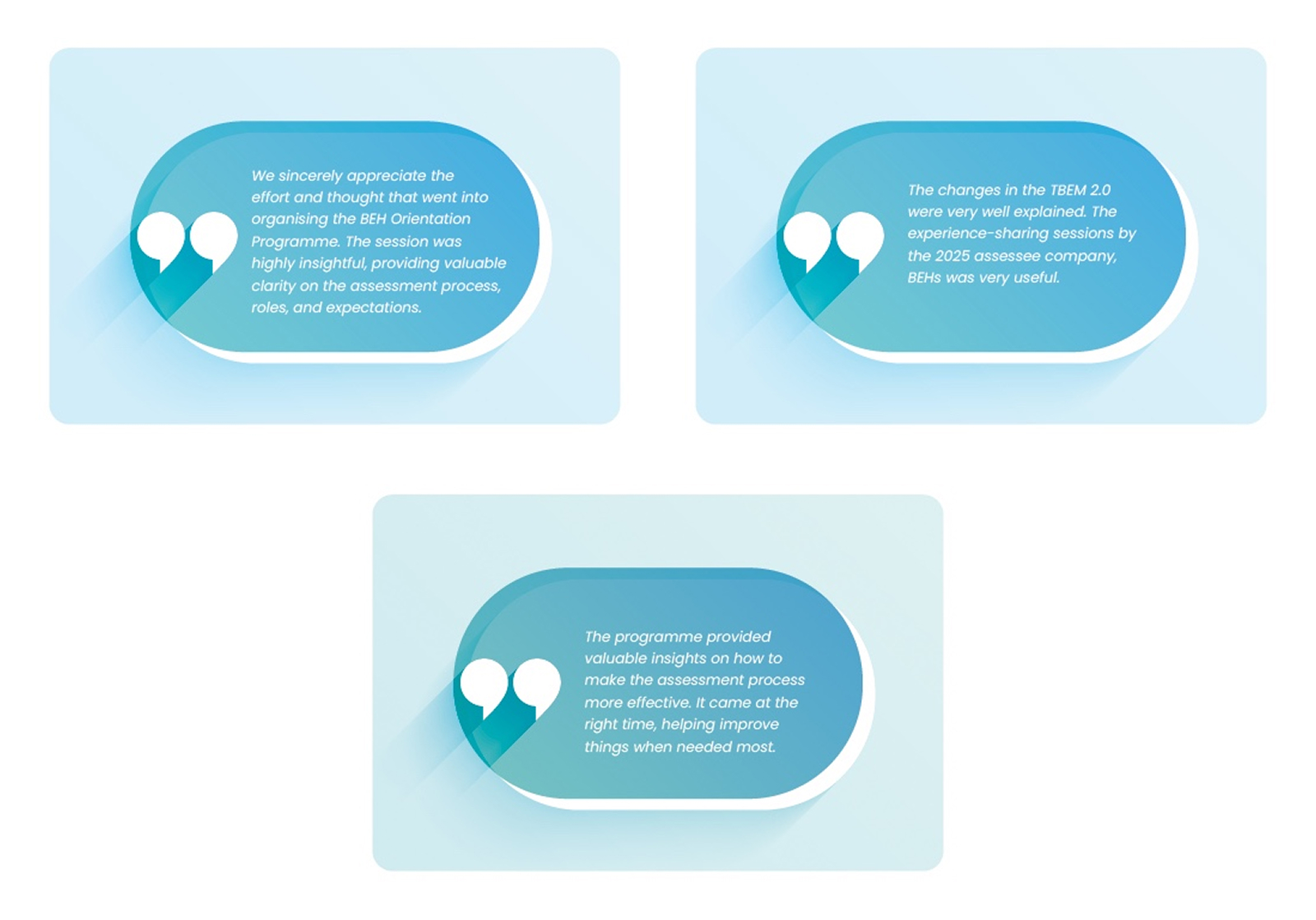
The online session was facilitated on May 08, 2026, bringing together Business Excellence Heads and BE Team members from participating Tata companies to align on the evolving assessment landscape, expectations, and the role of BEHs in enabling impactful assessments. The programme was designed to strengthen understanding of the TBEM assessment process, facilitate richer engagement with assessment teams and stakeholders, and prepare organisations for the upcoming assessment cycle. The session also enabled experience sharing from last year’s TBEM assessment.
The session commenced with a welcome and safety briefing by Namrata Basnet, Senior Manager, Business Excellence, TBExG. She updated on the TBEM Assessments 2026 landscape, which will include 14 assessments comprising TBEM and Focus Assessments, involving over 200 assessors.
The opening address delivered by Subhrajit Basu, Assistant Vice President - Service Delivery, TBExG. Subhrajit reflected on the enduring value of the Tata Business Excellence Model as a movement that goes beyond assessments and continues to create impact across Tata companies through collaboration, self-reflection, capability building, and shared learning.
He highlighted that while assessments are an important component of the journey, the true value of TBEM is generated across the entire process — from application writing and calibration discussions to site visits, feedback sessions, and action planning.
He reflected on feedback received from CEOs over the years, where assessment teams have been appreciated for their professionalism, ownership, business orientation, and ability to provide valuable outside-in perspectives. He highlighted that assessments must continue to become more rigorous while remaining empathetic, collaborative, and supportive in helping organisations improve.
A key segment of the orientation was led by Sayantan Roy, General Manger, TBExG, who provided a comprehensive walkthrough of the major changes introduced in TBEM 2.0 and the evolving assessment methodology. His session focused extensively on the concept of ‘Rigour with Compassion’ and how the philosophy is being embedded across the framework, assessment preparation, assessment process, and assessor roles.
The session also provided participants with deeper clarity on changes introduced in areas such as Data privacy, GenAI adoption, Digital transformation, Cyber security, operations design and effectiveness, and customer experience management. He explained how organisations are now expected to demonstrate stronger linkage between strategic priorities, customer expectations, operational processes, and measurable results.
In addition to framework-related changes, Sayantan highlighted several process improvements being introduced in the assessment journey, including revised application structures, Action Taken Reports (ATR), longitudinal analysis, structured business understanding calls, BEH calibration calls, and enhanced assessment tools and platforms. He stressed that these enhancements are intended to improve preparedness, strengthen collaboration between organisations and assessment teams, and ensure greater consistency and rigor throughout the assessment cycle.
Deepak Deshpande, Vice President, TBExG, conducted a focused session on the role and responsibilities of Business Excellence Heads across different phases of the assessment lifecycle. His session emphasised that BEHs play a pivotal role not only in coordinating assessment activities, but also in enabling openness, alignment, preparedness, and effective stakeholder engagement within their organisations.
He elaborated on how Business Excellence Heads act as key enablers throughout the assessment journey — from helping teams understand key business factors and preparing robust applications, to facilitating calibration discussions, enabling smoother site visits, and supporting meaningful interactions between assessors and organisational leadership. The session reinforced the need for BEHs to proactively guide stakeholders, ensure timely availability of information, create alignment across functions, and help organisations derive deeper value from the assessment process.
An important highlight of the programme was the experience-sharing sessions delivered by external Business Excellence Heads, Sonie Saran, Head - Business Excellence, Tata Consultancy Services Ltd and Adhiraj Sengupta, General Manager-Enterprise Excellence, Infiniti Retail, who brought rich practitioner perspectives and real-world learning from their extensive involvement in the 2024 TBEM Assessment cycle. Their sessions provided participants with practical guidance on what differentiates high-quality assessment journeys and how organisations can create an enabling environment for impactful assessments. They also helped the participants to understand the role of the BE team in ensuring an action-oriented assessment feedback.
Sonie Saran’s session focused on the human and collaborative dimensions of assessments and what truly makes a difference in creating meaningful assessment experiences. Drawing from her assessment journey, she highlighted that successful assessments are built on openness, trust, preparedness, and genuine engagement between the organisation and the assessment team. She emphasised that assessments should not be approached merely as compliance or scoring exercises, but as opportunities for organisations to pause, reflect, learn, and improve.
She spoke about the importance of helping assessors understand the organisation’s context, business realities, strategic priorities, and operational nuances so that the assessment conversations become more meaningful and insightful. She reinforced that Business Excellence Heads have a critical role in creating this environment of openness, collaboration, and trust across the organisation.
Adhiraj Sengupta’s session focused on practical learnings and critical success factors that contribute towards smoother and more value-driven assessment experiences. Drawing from his own assessment engagements, he highlighted the importance of effective calibration, transparent communication, and stakeholder alignment throughout the assessment lifecycle.
He emphasised the need for continuous engagement with assessment team members, active participation in calibration milestones, and ensuring that leadership teams remain aligned and informed throughout the journey.
Adhiraj further highlighted the importance of creating an atmosphere of trust and openness during assessments, where teams feel comfortable discussing challenges, opportunities for improvement, and organisational realities candidly. He encouraged participants to leverage assessments as platforms for organisational learning, continuous improvement, and capability building rather than viewing them purely as evaluation exercises.
The programme concluded with closing remarks by Sanjeev Singh, Head – TBExG, who brought together the key themes and learnings from the day’s discussions while reinforcing the larger purpose and spirit of the TBEM movement across the Tata group. He emphasised that TBEM assessments are far more than evaluation exercises — they are platforms that help organisations introspect, learn, improve, and build long-term excellence capabilities.
Sanjeev highlighted that the strength of the TBEM ecosystem lies in the collective contribution of leaders, Business Excellence practitioners, assessors, and organisations that come together with a shared commitment towards organisational improvement and learning. Referring to the evolving business environment and increasing organisational complexities, he emphasised that assessments must continue to remain rigorous, objective, and relevant while also being developmental and supportive in nature. He encouraged Business Excellence Heads to act not merely as coordinators of the assessment process, but as facilitators of organisational learning and transformation within their respective companies.
Appreciating the growing contribution of assessors, mentors, team leaders, deputy leaders, and Business Excellence Heads in sustaining and expanding the excellence ecosystem across Tata companies, Sanjeev acknowledged the willingness of companies to nominate talent into the assessment process and continue contributing to the larger movement. He noted that the journey creates value not only for organisations, but also for individual leaders and assessors through exposure, learning, and cross-company collaboration.
Overall, the BEH Orientation Programme 2026 served as an important platform to support the Business Excellence Heads for the upcoming assessment cycle by familiarising them with the evolving TBEM framework, enhanced assessment processes, and emerging focus areas. The programme ensured that BEHs are well-equipped to support rigorous, collaborative, and value-driven assessments while enabling their organisations to derive meaningful insights, stronger alignment, and continuous improvement outcomes through the TBEM journey.